Home Bodyweight Exercises That Are Actually Useful for Building Strength

To join a gym or not? That is often the first question people ask when they start their fitness journey. Personally, I am a big advocate for joining a gym simply because it gives you more choice. More equipment, more variety, and more ways to progress over time. That said, not having a gym membership does not mean you cannot train effectively or build real strength at home.
Bodyweight training done properly can lay a very solid foundation. It can help you build strength, improve movement, and grow confidence before you ever touch a barbell. It is also a great option if you are short on time, new to training, or simply prefer working out at home.
In this blog, I will take you through a range of home-based exercises that are genuinely useful, not just random movements thrown together. I will explain what muscles they work, how to perform them well, and finish with two simple home workout plans you can follow straight away.
This is written with everyday people in mind. You do not need to be an athlete, and you do not need to overthink it. Focus on good movement, consistency, and doing the basics well.
Lower Body Exercises You Can Do at Home
Reverse Lunges
Reverse lunges are an excellent option for building strength through the quads and glutes, while also challenging balance and coordination. Unlike traditional forward lunges, you step backwards into the movement. Many people find this easier on the knees and more stable overall.
Start by standing tall with your chest up. Step one foot back and lower both knees towards the floor, aiming for roughly 90-degree angles at the knees. A useful cue here is to lightly tap the back knee on the floor on each rep. This helps ensure you are using a full range of motion and not cutting the movement short.
Push through the front foot to return to the starting position. Repeat on the same side or alternate, depending on your preference.
To make reverse lunges more challenging, you can hold a dumbbell or kettlebell. If you do not have weights at home, a rucksack loaded with books or other items works surprisingly well.
Glute Bridges
Glute bridges are fairly self-explanatory, but do not underestimate them. They are brilliant for targeting the glutes, with good involvement from the hamstrings too.
Lie on your back with your feet flat on the floor, roughly shoulder-width apart. Keep your whole foot planted. Drive your hips up towards the ceiling and squeeze your glutes at the top of the movement. Your ribs should stay down and your core engaged, rather than arching through the lower back.
Lower yourself back to the floor with control, lightly touching down before driving back up again.
To progress glute bridges, you can place a weight across your hips or move to single-leg reps. Both options significantly increase the challenge without needing lots of equipment.
Lateral Lunges
Lateral lunges focus on the glutes and the groin muscles, also known as the adductors. These muscles often get neglected, but they play a big role in hip stability and overall lower body strength.
From a standing position, step out to the side and keep that foot firmly planted. As you lower down, aim to sit your hips back towards the heel of the stepping leg while keeping the opposite leg straight. You should feel a stretch through the groin and a strong load through the glute.
Drive out of the bottom position and return to the start. You can alternate sides or complete all reps on one side before switching.
Keep your chest tall throughout. Holding a weight in the goblet position can help with posture and balance, but take your time with these and ease into them.
Hamstring Walkouts
The hamstrings have two main functions: hip extension and knee flexion. Hamstring walkouts target both by asking you to keep the hips extended while slowly straightening and bending the legs.
Start in a glute bridge position with your hips lifted. From there, slowly walk your heels away from your body in small steps while keeping your hips up. Once you reach your end range, walk the heels back in and return to the starting position.
The absolute key here is to dig your heels into the floor throughout. This keeps the hamstrings working properly. If you can maintain space between your lower back and the floor when fully extended, you are doing a great job.
Core Training at Home
Core training should be a staple of any home workout. It is easy to implement, requires little to no equipment, and plays a big role in keeping the lower back strong and resilient.
Plank Shoulder Taps
Plank shoulder taps are all about stability. The goal is to keep the core engaged while moving the arms without excessive shifting or rotation.
Set up in a high plank position with hands slightly narrower than shoulder width and feet wider than you would for push ups. This wider stance gives you a more stable base.
From there, lift one hand and tap the opposite shoulder, then alternate sides. Try to keep your hips and lower back as still as possible. A useful image is to imagine a bowl of water resting on your lower back. If you tilt too much, it spills.
Quality matters more than rep count here. If you start to feel this mainly in your lower back rather than your core, it is time to stop the set.
Side Plank Hip Drops
A common issue with core training is that it often becomes very static. In reality, the spine and surrounding muscles are designed to move, bend, and rotate.
Side plank hip drops address this by lengthening and shortening the oblique muscles that run along the sides of the ribs and lower back.
Set up in a side plank position, then slowly lower your hips towards the floor before driving them back up. Think of it like a controlled curl for the side of the body.
You may feel restricted at first, and that is completely normal. Over time, your ribs will start to move more freely and the muscles will lengthen. To increase the difficulty, prop the elbow up higher to increase the range of motion.
Sit-Up to Overhead
This is a simple variation of the classic sit-up that encourages better engagement of the core.
Lie on your back with your arms extended overhead. As you sit up, swing the arms forward and finish with them locked out overhead. The arm movement helps with momentum, while the overhead position encourages more core involvement.
Control the lowering phase and avoid flopping back to the floor. Slowing this part down increases the benefit without needing extra reps.
Upper Body Training at Home
Upper body training can be more challenging at home, especially without equipment. That said, there are still plenty of effective options.
Push Ups
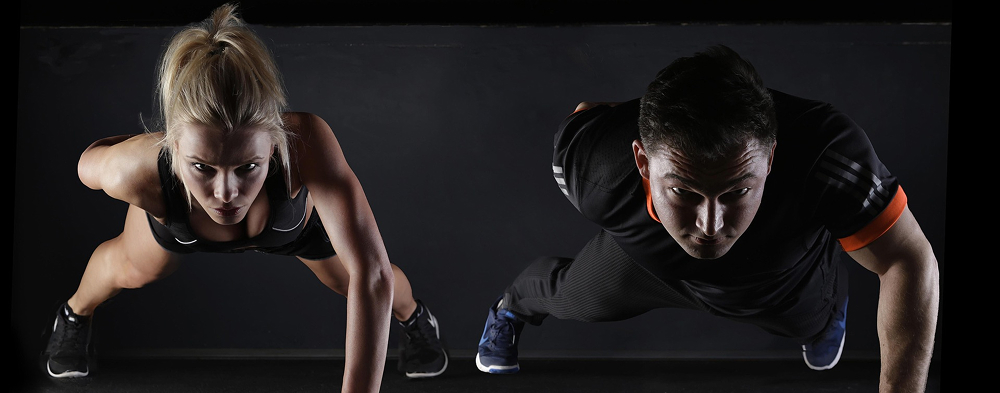
Push ups are a classic for a reason, but they are often performed poorly. When done well, they are one of the best upper body exercises you can do.
They primarily work the chest, shoulders, and triceps. Hands should be underneath the shoulders and just outside the chest. A simple way to find your natural hand position is to lie on the floor and place your hands where they feel most comfortable next to your chest.
As you lower down, let the elbows track back at roughly a 45-degree angle. This keeps the chest involved and avoids overloading the front of the shoulders. Aim to bring the chest all the way to the floor on each rep.
If full push ups are too difficult, drop to your knees or focus on slow negative reps where you lower under control.
Pike Walk Outs
Pike walk outs are a gymnastic-style movement that target the shoulders, triceps, and upper back, while also giving the hamstrings a good stretch.
From a push up position, walk your hands back towards your feet, lifting the hips into a pike position. Then walk back out again. Keeping the movement slow and controlled makes this far more effective.
To progress, you can place your feet on a raised surface such as a step or sturdy piece of furniture.
Prone Swimmers
Prone swimmers may look simple, but they quickly become challenging. They target the rear shoulders and the upper and middle trapezius muscles.
Lie face down on the floor with your arms extended overhead. Lift the arms off the floor and move them in a sweeping motion down towards your lower back, keeping the arms straight and off the ground throughout.
This is a great exercise for shoulder health and posture. I regularly use it with clients in the gym, especially as part of a warm up.
Dips
Dips primarily target the triceps, with some contribution from the chest. Use a stable surface such as a bench or chair.
Focus on achieving good depth while keeping the shoulders comfortable. Start with bent knees if needed, then progress to straight legs or even elevated feet as you get stronger.
Make sure your shoulders are properly warmed up before including dips in your workout.
Suspension Trainer Rows
Pulling exercises are often the hardest thing to replicate at home, which is why suspension trainers are such a useful investment.
Rows work a large portion of the back, including the lats, traps, rhomboids, and rear delts. Focus on lowering slowly and pulling with intent on each rep.
If you want to bias the upper back more, keep the elbows higher as you pull. To make the exercise harder, simply position your body closer to the floor.
Pull Ups
Pull ups are, in my opinion, the best pulling exercise you can do. They are challenging, but they are well worth working towards.
They train the lats, traps, biceps, and forearms all at once. Resistance bands are a great way to build up strength, gradually reducing the assistance as you improve.
Sample Home Workouts
Workout 1
- Reverse Lunges: 3 to 4 sets of 8 to 10 reps per side
- Hamstring Walkouts: 3 to 4 sets of 5 to 8 reps
- Push Ups: 3 to 4 sets of 8 to 12 reps
- Sit-Up to Overhead: 3 to 4 sets of 10 to 12 reps
- Prone Swimmers: 3 to 4 sets of 8 to 10 reps
- Suspension Trainer Rows (high elbow): 3 to 4 sets of 8 to 10 reps
Workout 2
- Lateral Lunges: 3 to 4 sets of 8 to 10 reps per side
- Glute Bridges: 3 to 4 sets of 12 to 15 reps or 8 to 10 per side
- Plank Shoulder Taps: 3 to 4 sets of 14 to 20 reps
- Side Plank Hip Drops: 3 to 4 sets of 8 reps per side
- Pike Walkouts: 3 to 4 sets of 5 reps
- Dips: 3 to 4 sets of 10 to 12 reps
- Pull Ups: 3 sets of maximum reps with good form
Final Thoughts
These exercises are ideal for beginners or anyone looking to train effectively at home. They build a strong foundation and cover all the major movement patterns.
Once you feel confident with these, I would recommend either adding some basic equipment at home, such as kettlebells or adjustable dumbbells, or considering joining a gym. You will already have the movement quality and strength base to get far more from it.
If you want help building a plan that suits your goals, whether at home or in the gym, feel free to get in touch. I work with clients in person at my private training space in Stourbridge, as well as online through app-based coaching. Support, clarity, and long-term progress always come first.
.webp)